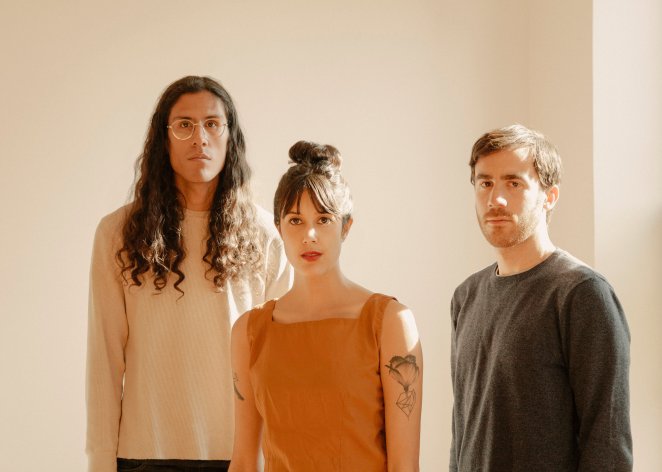
Margaret Glaspy

So Emotions and Math is one of my favorite albums from 2016. Ironically my other favorite album from 2016 is probably guitarist and former child prodigy Julian Lage’s Arclight. I recently learned that Glaspy and Lage are together. After I became aware of this fact I felt unintelligent for not already knowing it because Lage and Glaspy have performed together on numerous occasions and the videos are all over the internet. But alas following music need not mean following which musicians are dating.

Back to the music. Glaspy has a commanding voice. Deep and a little raspy, to me she embodies modern blues vocal performance. Glaspy is an intriguing blend of country, alt rock and blues-y vocals. All together her voice is deeply emotional and is heard deep in your gut and heart. With influences from a crowd as diverse as Joni Mitchell to Janis Joplin to Patti Smith to Bonnie Raitt to Amy Winehouse I hardly even know what to think about Glaspy other than that I love it.

And then there is her guitar playing. Tight and delicate but beautiful and forceful, Glaspy knows exactly when to leave notes hanging and when to fill them in. I am so glad that she is her own guitarist because I wouldn’t want anyone else to be responsible for when to leave that crazy commanding voice alone and when to accompany it. Listen to her guitar come in at 2:16 on the track below, “Anthony.”

And then there is her songwriting. Personal and raw and often crude her lyrics add an interesting element to her music. Her commanding vocals in many ways require commanding and attention grabbing lyrics, but her guitar playing and her band are often much more delicate and measured. I guess this is what works so well about Glaspy and makes her so unique. The instrumentals are tight, spare jazz sequences but her vocals and lyrics are emotional indie rock. It all comes together in a hybrid, bluesy masterpiece.

Back to Lage. I’m bringing up Julian this time to make a musical point not a romantic one (although those two things aren’t so different). Listen to the link below. They sound incredibly good together which is in some ways surprising! Glaspy’s voice seems to shine most on her albums with more minimalist accompaniment. However, interestingly, with Lage’s complex fancy finger work Glaspy still shines.

Half Waif Interview

Check out the interview I did with Half Waif for Rare Candy:

Half+Waif+BandHalf Waif is the ongoing project of Nandi Rose Plunkett who is also a member of the New Jersey band Pinegrove. Her ethereal and complex songs bring to mind an underwater impressionist painting, and her often haunting melodies pierce in their emotional intensity. Zach Levine and Adan Carlo, both also members of Pinegrove, play drums and bass respectively in Half Waif. Recently, Rare Candy had the opportunity to ask Nandi some questions about songwriting, identity, and the place of music in times of political struggle. 

RARE CANDY: Your music is fascinating to me. I’ve learned about music mostly informally—going to shows, listening to my parents’ favorite albums, hours on Bandcamp, etc. —but I’ve also studied a bit of music history, and your music as Half Waif seems to draw from many different canons. Just listening to “Severed Logic” I hear multiple cultures and generations at play. What do you feel like you’re consciously drawing on? Going back and listening to your finished work, what do you feel unconsciously also slipped in?

HALF WAIF: I feel like whenever I try to consciously weave something into my music, I never really stick to it. Like, I’ll say to myself, “I love how open James Blake’s arrangements are, how he uses such minimal sounds to such great effect.” And then when I start arranging with that in mind I’ll end up filling in all the spaces anyway. So I think consciously, the only thing I know how to do is follow this sort of thread of myself, wherever it takes me. But I’m glad to hear that you experience different cultures and historical references in the music – I wonder if because I’ve steeped myself in different genres throughout my life, from musical theater in high school to the works of impressionist composers in college, those familiar elements trickle into the cracks or perhaps fuse together to create a kind of mosaic. At the end of the day, I’m constantly hunting for new music and new sounds and don’t really look back too much. So I think the influences, whatever they might be, flutter and shift quickly throughout the music.

RC: On your website you talk about identity and home. If you feel comfortable, I’d love to know a little more about this.

HALF WAIF: I was just writing about this in my journal today: the way we create our identity and how it seems to be comprised of many selves that take shape through experience. These selves start out as soft parts of us, then become hard and solid as we confront new situations that define us. Visually, I imagine that we all start out as lumps that continue to gain hard angles as we grow, until we acquire the form we’re in now. The idea of giving concrete form to ephemeral ideas/notions is something I explore a lot in my new EP, form/a. I realized recently that this search of identity and home that consumes me is a passed down to me through the women in my family. My grandmother lived through the British Partition and had to leave her home in Lahore when it became Pakistan, and then years later, my grandmother and mother and their family were forced to leave their home in Uganda when Idi Amin took power and expelled all the Indians. So my granny was a refugee twice and my mother became one too. Lahore, my granny’s home, suddenly took on a new form when it became Pakistan, yet it was still the same physical space, still the same landscape. This transmutability of homes fascinates me – how we ascribe meaning to places and make homes of things, when we are, by design, transient beings and nothing belongs to us.

RC: Within the context of our current political climate in the US, do you feel like these questions of identity and place have been made political?

HALF WAIF: Absolutely. The aggressively nationalist agenda of the new administration is terrifying and seems to address and benefit only a tiny fraction of our population. We’re suddenly being told that to be an American is to be one certain way; primarily, white. This isn’t new, of course, but now the folks in the highest levels of government are enacting policies that are trying to shape the country based around that one identity. Building a wall to keep out Mexicans. Encouraging the deportation of immigrants. Prioritizing the agenda of squashing anti-police sentiments without recognizing the very real dangers that are posed to African-Americans every day. And it’s just baffling because obviously so much of this country is made up of intercultural communities! It’s not America without them! And yet millions are being forced to question their identity as American citizens and the rights that have been given to them.

RC: In your opinion, what is the place of politics in music? Do you personally feel that as an artist you have a role to play in our political universe?

HALF WAIF: After Trump was elected, my first thought was, “well, how can I go on doing music now? Nothing matters except our efforts to combat this oppressor and protect those who need protection most.” I was on a Pinegrove tour and felt really confused about what I was doing. But in talking to my bandmates and other artists, it’s become clear that music is an important activity, now especially, because it has such a unique capacity to connect diverse audiences. Music is also something people turn to when they seek to be soothed, inspired, nourished, motivated, quieted. It can be a lifeboat, a receptacle for fears and dreams, a rocket to a faraway place. So I think even without having overtly political lyrics, music can play a role in the political realm by traversing the space beyond words and reaching deep into people, thus becoming a positive force in building and sustaining communities.

RC: You are also a member of Pinegrove, a band all of us at Rare Candy are big fans of. We have some writers from the Montclair area who have followed the band for a long time, and we’ve all been impressed (but of course not surprised) by how much success you all have had recently. What do you think makes Pinegrove’s music so appealing to so many folks?

HALF WAIF: Evan’s songs are remarkable because they are both direct and serpentine. They’re direct in their narration, their self-awareness, but his use of language is beautifully twisted. I think the sentiments resonate with a lot of people, particularly youth because they deal with themes of growing into adulthood and finding your place in the world. And then the way he describes this is so unique and exciting. It’s always exciting to see someone take familiar elements and devise their own language, and that’s what I aim to do too, though more with the sounds and song structures than with the lyrics.

RC: Evan shared a beautiful message about love and caring for one another at the Pinegrove show some Rare Candy folks and I attended at Irving Plaza during the last tour. Do you see venues and music spaces as possible places of resistance/political action? Do you see Half Waif shows as a space for political messages?

HALF WAIF: Without a doubt, music venues are incredibly crucial spaces right now – which is why we really need to fight for DIY spaces that are under attack all across the country. These spaces are typically all-ages, substance-free, and welcoming for people of all genders, races, physicality, religious belief, etc etc. Little slices of utopia, if we allow ourselves to dream that way.

I don’t think musicians need to feel obligated to say something political during their shows, but I do think we have a responsibility to use this platform we’ve been given to connect with people however we can. On the Pinegrove tour, I think Evan did that beautifully. On the ongoing Half Waif tour in Europe, I’m also speaking onstage about the political situation – not in a way that feels forced, but because I am fully enraged and am channeling that into every outlet I possibly can. It’s been amazing to see how much support the resistance movement has all over the world – the way the Women’s March spread to dozens of countries – so there has definitely been a very encouraging vibe. For some people we’re playing for, we’re the only Americans they’re getting to talk to, so I feel a sense of duty in representing our country and explaining the deeply dangerous situation we’re in. “Keep Calm and Carry On!” said one audience member at our show in Manchester last night, after I finished talking, and I shouted back, “No, we can’t keep calm! We have to rise up!”

RC: Do you feel like you’ve learned certain things from Pinegrove that you’ve employed in Half Waif’s music? The music is pretty different, but I’m curious where you may see similarities.

HALF WAIF: I hope that listeners find that at the core of the recordings are songs that could exist in a myriad of different settings. Still, in the recording process I’m really excited by arranging and production. And that’s something that Evan and I definitely share: we’re both songwriters, and we talk to each other a lot about how to be effective storytellers. We may go about that in different ways sometimes, but ultimately we share that common ground of wanting to communicate ideas and emotions through a combination of musical tools.

RC: What do you hope for Half Waif in the next year? How is the European tour going already?

HALF WAIF: Half Waif has been growing since February 2012. It’s been a slow growth, and throughout this time I’ve really had to cultivate patience, which hasn’t always been easy! But it’s given me a chance to refine my songwriting (which is obviously an ongoing process), think a little more critically about what I’m writing, how I want to communicate, and now I feel ready for more people to hear it. We’re blessed to be working with a great team for the first time who are helping us share the music, so I hope that we can continue to tour and reach new people this year. It’s a simple goal, but it’s one I’ve been working at for a long time.

We’re early on in our Europe tour at the moment, but our first few shows have been so fun. I still can’t believe we’re getting to play these songs for audiences overseas! And that people are actually coming to see us! It’s weird to be here with so much going on back home, but we’re seeing this as an opportunity to talk to people and spread a message that we’re out here not just to share our music but also to reaffirm our commitment to being forces for positive change in this world. Every day, we’re trying to flex our political muscles to remind ourselves that even though we may feel small and hopeless, we do have power as individuals, and all of that individual power combines to make a mighty force.

LISTEN TO HALF WAIF: https://halfwaif.bandcamp.com

(http://www.rarecandy.org/interviews/2017/3/22/half-waif)
Aaron Diehl presents Jelly & George feat. Adam Birnbaum & Cécile McLorin Salvant at SFJAZZ

Jelly Roll Morton and George Gershwin probably wouldn’t be your first idea for a pairing of two great jazz composers. Both are indeed great, but they never knew each other as Jelly Roll was in New Orleans while Gershwin was in New York City. However, they are contemporaries, born only 8 years apart from one another.

Aaron Diehl in his most recent series of concerts takes on the pairing with a playful and often humorous approach. Diehl’s piano playing along with Adam Birnbaum’s is impressive. Although Diehl is the bandleader the two pianists work together closely, complementing each other and graciously handing off the spotlight often. It was on a beautiful, slow and quiet early Gershwin piece that this became extremely evident. You know a good team of musicians from how quiet they can get together, and wow they got quiet. Diehl and Birnbaum softly and deftly handed off flourishes between each other for quite a long time. The two pianos continued to impress throughout the night.

Diehl’s band is exceedingly lively and virtuosic. I was truly floored by the rhythm section (Paul Sikivie on bass and Lawrence Leathers on drums) and the brass (Corey Wilcox on trombone and Bruce Harris on trumpet) and a single clarinetist (Evan Christopher). The clarinetist, Christopher, showed his chops very early in the night with the craziest clarinet solo I’ve ever heard. Lively and high and low. I’d actually never heard such gorgeous high notes from a jazz clarinet before. Diehl gave Christopher ample opportunities to solo throughout the night, and I was so glad (@@@Glasper). The trombone, Wilcox, only took one solo all night, but I was floored. Mostly by how loud and powerful he was. I’m usually more impressed by how quiet a brass instrument can get, but I have to say Wilcox’s power in his solo took my breath away. All together trombone, trumpet, and clarinet got reeeeeally quiet at times. Most notably during Jelly’s Whiny Boy (more to come on this tune).

I’m not ignoring the rhythm section. They were not the stars of the show and mostly played quietly, setting up their comrades’ solos (each were given only one short solo). A highlight of the whole night though was Leathers’s solo. He played an incredibly free and wild solo that was pretty different from the rest of the program. It was a thrill. At one point he lifted up his snare drum and yelled into it.

Many came to the show for one reason and one reason only: Cecile McLorin Salvant. Salvant was prominently featured on the bill but only ended up singing on probably a third of the tunes Diehl’s band played. Oh did she deliver though. Undoubtedly she’s one of the few who gives Ella Fitzgerald and Billie Holiday a run for their money (not that it’s a competition). Salvant was playful and fun while undoubtedly masterful showing a superhuman command for the lowest notes. Salvant really shined as a performer on Whiny Boy (Jelly Roll), a pretty explicit song. She sang beautifully and conveyed the humor of the thing brilliantly with impeccable timing. It’s cool to see a jazz vocalist consider timing as a device of humor (something you’d of course expect in musical theatre but maybe not at a jazz show today).

What ultimately ended up being so illuminating about the particular program for the night is something quite obvious. New Orleans and New York sound so damn different even though they both got the blues so hard!

Brad Mehldau in Sonoma, CA

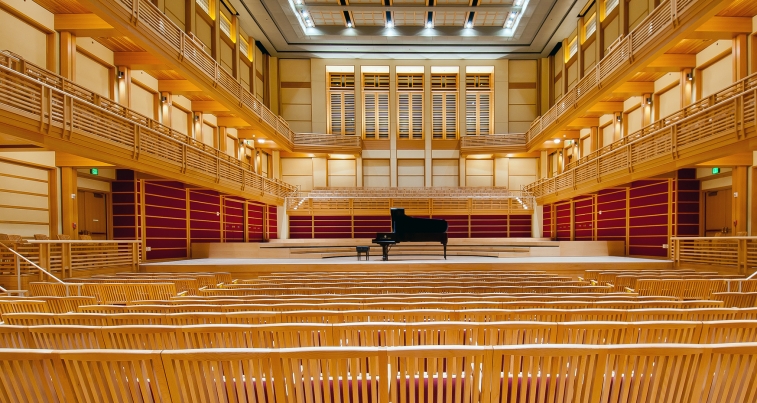
Saturday, on a fine, warm California evening, I went with my mother to hear Brad Mehldau solo at the Green Center in Sonoma. If you’ve never been inside this concert hall you don’t know true beauty. The whole building (seats included) is pale pine which produces a fantastic reverberation throughout the hall. Behind and around the stage is more pine interlaced with deep red sound wall. The aesthetic is poetic, and the design is utilitarian for the acoustics. That is a lot of beauty already, and I haven’t even mentioned how the hall is situated on a beautiful green California hill in wine country overlooking farms and vineyards and mountains. A magical magical place to hear music (I’d seen the alpine symphony performed there and my parents saw the Buena Vista Social Club there which is insanely cool).

Mehldau (as stated) was taking the stage solo to play an exciting combination of Bach, original compositions responding to the Bach pieces, and improvisations. He started with Prelude No.3 in C-sharp Major from The Well Tempered Clavier, then played his composition, “Three Pieces After Bach,” then Prelude No.1 in C major from the same book, and then finally an improvisation on Bach. Mehldau followed essentially this same form throughout the night, coupling Bach pieces (my favorite being Fugue No. 16 in G Minor from Well-Tempered) with “Three pieces after Bach” and an improvisation.

It was really extraordinary to hear Mehldau, a pianist I’d primarily heard play jazz, play Bach. For me it made certain things about Mehldau’s style more clear. His light touch and many aspects of his technique scream classical piano even when he’s playing in a jazz band, but even beyond that his attention to the formal architecture of music (obviously inherent to Bach who basically created it) brings many elements of classical music to Mehldau’s piano playing and composition.

What was perhaps most revelatory to me was hearing Mehldau play jazz right after hearing him play Bach. Maybe this is because I listen to more jazz than classical, but I think it was also undoubtedly the point of the program. Mehldau’s improvisations, performed after the Bach pieces, were at times so wild and free but hearing them following the Bach the listener is actually able to seek out the structure and formal architecture where normally it might be difficult to find. This brought a very cool and different element to his improvisations. At times I’d thrill myself by encountering fugues in his improv!

At the end of the evening Mehldau pleased those in the audience who know him more for his jazz piano (me) by playing beautiful renditions of “How Long Has This Been Going On” and “And I Love Her.” With his first touch of the keys the main theme of “And I Love Her” was introduced, and I was so surprised he was playing it for this crowd after that program. But it was such a crowd pleaser. The way Mehldau treated the theme literally got GASPS from the crowd and made my mom cry. He would just drop it in effortlessly and so lightly it truly floated around us, sometimes barely audible. Mehldau departed so completely from the song throughout the whole middle of the piece that I was certain he’d moved on from it completely, but then at the end he twisted it all back together with the most delicate, gentle flourish (again drawing many gasps). My mom likened the lightness of his playing to Pat Metheny (a guitarist Mehldau has collaborated with a lot) a comparison I see as quite accurate. Both musicians float above each note leaving a little to be filled in by your own imagination.

Jazz Profiles: Esperanza Spalding

This past Sunday WKCR’s listeners had the pleasure of hearing me play Esperanza Spalding’s whole discography. I’d known Spalding primarily for Junjo and her more classic bass work. Little did I know that in more recent years Spalding has been totally re-defining herself and the jazz album. She took the bass prodigy label and threw it out the window with albums that include spoken word poetry, complex vocal styles, and electronic beats. And I’ve heard her next album is a full length opera on which she plays zero bass.

I suppose it makes sense that someone who taught herself violin at 5, was one of the youngest professors at Berklee at 20, and performed for the President before 30 would feel pressure to break out. Spalding has always tried to throw off the “prodigy” label, claiming the title has more to do with her gender and choice of instrument than anything else. Now she’s using more pop and R&B vocal work to break out from constraints put on her musically.

We started off the show with Junjo which showcases Spalding’s uniquely optimistic bass work. Next we heard her self titled album which was likely my favorite. Esperanza is jubilant and free while still showing Spalding’s capabilities on the bass. On the album she sings in English, Spanish, and Portuguese, and the vocals are undoubtedly one of the best parts of the record.

So many wonderful people called in to the station to express their joy that we were profiling the lovely Esperanza Spalding. Many, like me, had primarily known her as a straight ahead jazz bassist and were happy to hear her more pop and R&B side.

Take a listen to some of the tracks I enjoyed most below and don’t forget to TUNE IN TO WKCR FM NY ALL THE TIME FOR THE BEST JAZZ PROGRAMMING AROUND!

My shows specifically are: New music from 1-5am every other Monday night/Tuesday morning and JAZZ from 5-8:20am every other Wednesday morning. All EST.

Bass is so important wow.

Early Mornin’ Jazzin: Daybreak Express

Hi folks, how’re things? I discussed briefly how much time on air I have this week in my last message to you. Monday night from 1-5am I played some avant garde sounds: Carl Stone, John Cage and Chainsaw Jazz. It was a good time. I started the night with a little Stan Getz & Charlie Byrd Jazz Samba to transition from the show prior to mine, Latin Jazz Hour. A lovely friend of mine spent the first few hours hanging with me, and we joyously danced (?) to Carl Stone (can you dance to Carl Stone?). After they left I got super super scared by John Cage and a litany of voices. I then got super tired. Chainsaw Jazz was a good energetic end to the night.

This morning has proved itself more enjoyable. I went to bed early and arose at 4:30am with an abundance of energy. I started listeners off with The Enchantment, an album featuring Chick Corea and Bela Fleck. It’s a truly fantastic record with interesting elements of bluegrass thanks to Fleck’s banjo and always held down by Corea’s virtuosic and uniquely energetic piano playing. My favorite track on that one is “Brazil.” (attached below).

Next, the sweet sweet soulful sounds of Ray Charles graced the airwaves. I played his album The Genius Hits the Road a wonderful little collection of classics. There’s really nothing like some Ray Charles for your heart, mind, and soul. We were still in the 5am hour, but I was dancing to “Basin Street Blues,” “New York’s My Home,” and “Deep in the Heart of Texas.” Thank you Ray.

To get some contrast after the crackly deep tones of Ray’s voice, I put on Snarky Puppy’s album We Like It Here, a soon to be classic. They may just be the best modern jazz band from Brooklyn now, but some day Phil Schaap will be playing them. Seriously. Listening to the drums on “Lingus” now, I am literally laughing thinking about how good they are. My confidence in my choice was boosted when right after announcing the Snarky Puppy record a listener called in just to tell me what fantastic programming I’m doing this fine morning. Nice. And then another listener called deeper into the album to complement my programming as well! All these nice folks in the world. Jazz is social justice, and it has been for many many years. I hope it will bring America together in the future like it did in the past. And not through the unfair exploitation of “black gold” as Jesse Williams so eloquently put it at the BET Awards last year. His speech is extremely worth listening to; he quotes Billie Holiday.

I’m writing this while listening to the truly climactic end to We Like It Here, “Lingus.” It’s some crazy crazy shit. We’ll listen to some Joe Pass solo guitar next to cool down. All any of us really want is someone to play guitar for us like Joe Pass does (or to play guitar like Joe Pass). A whole lot of love goes into each pluck of his guitar strings. I actually don’t think I can name any guitarist who has a warmer color than Joe Pass does. His guitar sounds like a rosy luminous red but at the same time is extremely soulful and can be so damn bluuuuues-y.

Don’t forget to tune in Saturday night / Sunday morning 1-6am EST to hear me spin some more jazz on Jazz Till Dawn: 89.9FM NY and wkcr.org.