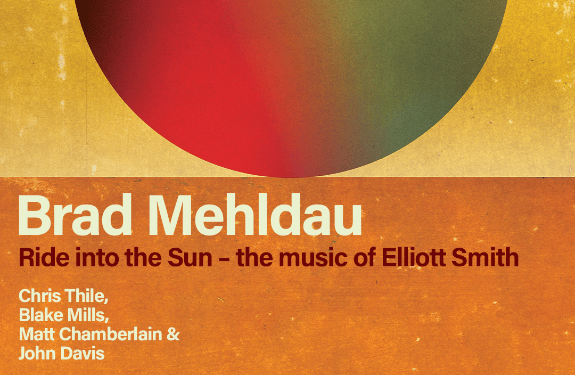
Ride Into The Sun at the Paramount Theatre (Aug. 29th Oakland, CA)

This blog has featured Brad Mehldau quite a bit, and for good reason: he’s the goat. The piano goat. But who is the singer-songwriter, indie-grunge, acoustic guitar goat? Elliott Smith, of course. And sometimes, wonderfully, legends of different musical worlds crash into each other. This happened in LA in the late 90s when Brad went to an open mic and saw Elliott sing and play guitar. As he described to us Saturday night in Oakland, his mind was blown. Over the next five years, the two got to play together a few times (see below). 

Last year, Brad released an album featuring Elliott’s music, something he says he long wanted to do. It’s a beautiful tribute; the arrangements are lush and full but never detract from Elliott’s melodies. For the album, Brad recruited the one and only Chris Thile to play mandolin and sing as well as Daniel Rossen on guitar + vocals, Felix Moseholm and John Davis play bass, and Matt Chamberlin (Pearl Jam!) on drums (and “screams” on “Everything Means Nothing to Me”). 

Earlier this year, Brad announced that he would be doing a truncated tour behind the album. For the tour, he would be joined by Chris Thile, Matt Chamberlin, John Davis, Blake Mills on guitar (!), plus an orchestra conducted by Dan Coleman. 

I have been a Chris Thile and Blake Mills fan since 2016-17ish. I was introduced to Chris when I went with a friend from WKCR to see the Punch Brothers at Rockwood Music Hall (RIP). It was pretty mind blowing, especially as someone who hadn’t seen a ton of bluegrass at that point. So, thank you, Charlie. I fell for Blake not long thereafter, first, via his album Heigh Ho. I love love love “If I’m Unworthy” and “Don’t Tell Your Friends About Me.” Such cool, interesting, genre-bending songs. Great guitar tones + lines, and I also love his style of singing. Zach described it once as “pushing” words out which I think is spot on.  

This super group would visit LA, Oakland, Portland, OR, and Groton, MA. As alluded to in my previous post, I live in New York (Prospect Heights, Brooklyn aka heaven on earth, to be precise). Ugh. I figured I would take the L on this one, but then my concert-committed, jazz-loving, cool CA-based mom asked if I would consider flying out for the Oakland show (and long weekend with fam). Side-note: my parents were introduced to Elliott via this album and have since become big fans which I love. My mom recently sent a pic of Sweet Adeline sheet music; she’s learning it on piano. Of course, I will and have traveled for shows. Lesser shows included. I would be there. 

My sweet family and I had dinner in Oakland at Pomet before the show. It was tasty, although the vibes kind of made me miss BK. Contrary to stereotypes re Californians and NYers, I find people much more friendly and open in NY (BK especially). Bay Arians (?) are of a cooler temperament. And I like talking to people. I like people generally, in fact, which doesn’t seem to be the universal vibe in SF these days.  

Anyways, somewhat surprisingly given our accumulative years in the Bay + frequent concert attendance, none of us had been to the Paramount. It’s absolutely gorgeous. Art-deco with spectacularly high ceilings and gold painted intricately carved wooden walls. It reminded me a bit of the glory of King’s Theatre in Flatbush, but it’s much narrower theatre which definitely is better for the sound. I felt much anticipation seeing Blake’s guitars (including a really gorgeous sunburst red hollow body Gibson). 

The band + orchestra basically played the entire album! For “I Better Be Quiet Now,” it was just Brad + the orchestra at first. Brad’s treatment of that song is so incredible. The solo-piano moments were some of my favorites. His intense familiarity with these songs and their melodies is obvious. Hearing him weave in and out and all around Elliott’s songs is special. For me, the highlights were I Better Be Quiet Now, Between the Bars, The White Lady Loves You More, Color Bars, and (the encore) Son of Sam. 

Two songs made me weepy. I Better Be Quiet Now and Thirteen (the only non-ES cover). I love Thirteen so much. I think it is one of the most tender, heartfelt, gorgeous songs . I love Elliott’s version, and also the Bedouine led trio + Wilco versions. (See below!) And I love the Big Star original! Brad’s version was stunning, heart-breaking. Entirely melody driven and true to the song. Not that jazz-y (tbh none of the show/album was/is, and I am glad about that, no shade to jazz, obviously). 

For me, the show was really about the music, a true tribute to how special these songs are/Elliott’s songwriting is. But, of course, the band was wonderful. Chris Thile absolutely shredded on Southern Belle. And, throughout, watching him listen in ecstasy to Brad playing these songs was a glorious experience unto itself. Blake added really cool noise to a lot of the songs and also sang harmonies. Matt Chamberlin was noticeably incredible, tight as hell. It was also interesting to hear Brad play with a non-jazz drummer. Jazz drumming is so specific. This was a different experience in a cool way. 

Grateful! Grateful I made it out west, and for my family and for Brad and the band and the orchestra. 

ES 4ever. Thank you for the songs.
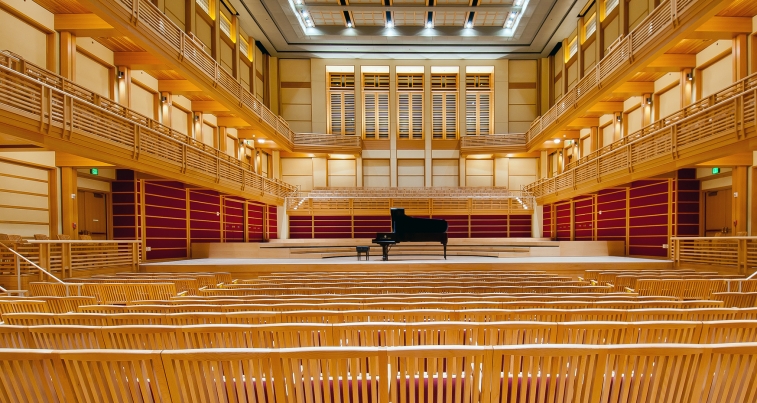
Chris Potter at SFJAZZ

This evening I went with my two jazz-loving parents to see Chris Potter at SFJAZZ. Often times my mother will take me and my father to see jazz, but tonight I was taking them. I’ve been interested in seeing Chris Potter for a while. I think I first became aware of him through Snarky Puppy’s social media account which reposted a video of him playing. I was captivated by the power of his tenor sax.

I began to listen to Potter’s recorded work and was blown away by his 2002 album “Traveling Mercies.” The album is at once mystical, wild and free while also refined in its melodic beauty. I loved each track on its own, but it especially blew me away as an album. I felt like I had been waiting for that jazz record to lift me up and take me away for a long time. “Traveling Mercies” features Potter not only on tenor and soprano sax but also on alto flute and bass clarinet. Often you’ll even hear Potter overdub himself signing and playing multiple different instruments. The record also features pianist Kevin Hays, bassist Scott Colley and drummer Bill Stewart. John Scofield contributes cool and tight solos on three tracks and Adam Rogers adds nylon-string and slide on two other tracks. The album sounds undeniably modern and often quite strange with unique meters, but it is kept grounded by the power of Potter’s tenor sax which is weaved throughout. It is a remarkably beautiful and thought provoking record.

Next I listened to Potter’s 2001 album “Gratitude.” Different from “Traveling Mercies,” each track on “Gratitude” literally shows its gratitude for a different jazz legend in its title: “The Source (for John Coltrane),” “Shadow (for Joe Henderson),” “Sun King (for Sonny Rollins),” and so on and so forth. Potter honors Coltrane, Henderson, Rollins, Eddie Harris, Wayne Shorter, Michael Becker, Joe Lovano, Lester Young, Coleman Hawkins, Charlie Parker, Ornette Coleman, and “The Current Generation” in each of his song titles. After listening to “Traveling Mercies” the album felt a bit timid. I guess it was not fair of me to listen to the newer record first. However, what is undeniable on the record is Potter’s virtuosity on the tenor sax. The record features Hayes on keys and Colley on bass again and also Brian Blade on drums (!!! I love Brian Blade !!!).

Chris Potter did not disappoint. He played all new music from his freshly released album, “The Dreamer is the Dream,” with pianist David Virelles, drummer Marcus Gilmore, and bassist Ben Street (Joe Martin plays bass on the album). Every member of the quartet shined and the music was exquisite. It was exactly what I was hoping for: a step even further from “Traveling Mercies,” with wild free solos, adventurous melodies, and crazy meters.

Potter is an extraordinarily creative composer using a synth to start a few of the songs with mystical chimes and the beautiful sounds of rain and the earth. This type of experimentation with electronic sounds isn’t exactly common in the particular jazz world Potter inhabits, and I could see skepticism on the faces of some around me. However, Potter uses the synth to make a genius point.

The mystical electronic earth sounds are soon overtaken, slowly, by a rapturous and powerful piano and a primitive drum. Soon a wild bassline comes in. Before you know it the synth has gone completely silent, and it has been overtaken by piano, drums and bass. And then you start to realize that those electronic sounds never sounded entirely different from the live sounds of the instruments. And then the huge sound of Potter’s sax blows into your ears and through your body, waking you up and making you remember what life is about.

Margaret Glaspy

So Emotions and Math is one of my favorite albums from 2016. Ironically my other favorite album from 2016 is probably guitarist and former child prodigy Julian Lage’s Arclight. I recently learned that Glaspy and Lage are together. After I became aware of this fact I felt unintelligent for not already knowing it because Lage and Glaspy have performed together on numerous occasions and the videos are all over the internet. But alas following music need not mean following which musicians are dating.

Back to the music. Glaspy has a commanding voice. Deep and a little raspy, to me she embodies modern blues vocal performance. Glaspy is an intriguing blend of country, alt rock and blues-y vocals. All together her voice is deeply emotional and is heard deep in your gut and heart. With influences from a crowd as diverse as Joni Mitchell to Janis Joplin to Patti Smith to Bonnie Raitt to Amy Winehouse I hardly even know what to think about Glaspy other than that I love it.

And then there is her guitar playing. Tight and delicate but beautiful and forceful, Glaspy knows exactly when to leave notes hanging and when to fill them in. I am so glad that she is her own guitarist because I wouldn’t want anyone else to be responsible for when to leave that crazy commanding voice alone and when to accompany it. Listen to her guitar come in at 2:16 on the track below, “Anthony.”

And then there is her songwriting. Personal and raw and often crude her lyrics add an interesting element to her music. Her commanding vocals in many ways require commanding and attention grabbing lyrics, but her guitar playing and her band are often much more delicate and measured. I guess this is what works so well about Glaspy and makes her so unique. The instrumentals are tight, spare jazz sequences but her vocals and lyrics are emotional indie rock. It all comes together in a hybrid, bluesy masterpiece.

Back to Lage. I’m bringing up Julian this time to make a musical point not a romantic one (although those two things aren’t so different). Listen to the link below. They sound incredibly good together which is in some ways surprising! Glaspy’s voice seems to shine most on her albums with more minimalist accompaniment. However, interestingly, with Lage’s complex fancy finger work Glaspy still shines.

Brad Mehldau in Sonoma, CA

Saturday, on a fine, warm California evening, I went with my mother to hear Brad Mehldau solo at the Green Center in Sonoma. If you’ve never been inside this concert hall you don’t know true beauty. The whole building (seats included) is pale pine which produces a fantastic reverberation throughout the hall. Behind and around the stage is more pine interlaced with deep red sound wall. The aesthetic is poetic, and the design is utilitarian for the acoustics. That is a lot of beauty already, and I haven’t even mentioned how the hall is situated on a beautiful green California hill in wine country overlooking farms and vineyards and mountains. A magical magical place to hear music (I’d seen the alpine symphony performed there and my parents saw the Buena Vista Social Club there which is insanely cool).

Mehldau (as stated) was taking the stage solo to play an exciting combination of Bach, original compositions responding to the Bach pieces, and improvisations. He started with Prelude No.3 in C-sharp Major from The Well Tempered Clavier, then played his composition, “Three Pieces After Bach,” then Prelude No.1 in C major from the same book, and then finally an improvisation on Bach. Mehldau followed essentially this same form throughout the night, coupling Bach pieces (my favorite being Fugue No. 16 in G Minor from Well-Tempered) with “Three pieces after Bach” and an improvisation.

It was really extraordinary to hear Mehldau, a pianist I’d primarily heard play jazz, play Bach. For me it made certain things about Mehldau’s style more clear. His light touch and many aspects of his technique scream classical piano even when he’s playing in a jazz band, but even beyond that his attention to the formal architecture of music (obviously inherent to Bach who basically created it) brings many elements of classical music to Mehldau’s piano playing and composition.

What was perhaps most revelatory to me was hearing Mehldau play jazz right after hearing him play Bach. Maybe this is because I listen to more jazz than classical, but I think it was also undoubtedly the point of the program. Mehldau’s improvisations, performed after the Bach pieces, were at times so wild and free but hearing them following the Bach the listener is actually able to seek out the structure and formal architecture where normally it might be difficult to find. This brought a very cool and different element to his improvisations. At times I’d thrill myself by encountering fugues in his improv!

At the end of the evening Mehldau pleased those in the audience who know him more for his jazz piano (me) by playing beautiful renditions of “How Long Has This Been Going On” and “And I Love Her.” With his first touch of the keys the main theme of “And I Love Her” was introduced, and I was so surprised he was playing it for this crowd after that program. But it was such a crowd pleaser. The way Mehldau treated the theme literally got GASPS from the crowd and made my mom cry. He would just drop it in effortlessly and so lightly it truly floated around us, sometimes barely audible. Mehldau departed so completely from the song throughout the whole middle of the piece that I was certain he’d moved on from it completely, but then at the end he twisted it all back together with the most delicate, gentle flourish (again drawing many gasps). My mom likened the lightness of his playing to Pat Metheny (a guitarist Mehldau has collaborated with a lot) a comparison I see as quite accurate. Both musicians float above each note leaving a little to be filled in by your own imagination.

Jazz Profiles: Esperanza Spalding

This past Sunday WKCR’s listeners had the pleasure of hearing me play Esperanza Spalding’s whole discography. I’d known Spalding primarily for Junjo and her more classic bass work. Little did I know that in more recent years Spalding has been totally re-defining herself and the jazz album. She took the bass prodigy label and threw it out the window with albums that include spoken word poetry, complex vocal styles, and electronic beats. And I’ve heard her next album is a full length opera on which she plays zero bass.

I suppose it makes sense that someone who taught herself violin at 5, was one of the youngest professors at Berklee at 20, and performed for the President before 30 would feel pressure to break out. Spalding has always tried to throw off the “prodigy” label, claiming the title has more to do with her gender and choice of instrument than anything else. Now she’s using more pop and R&B vocal work to break out from constraints put on her musically.

We started off the show with Junjo which showcases Spalding’s uniquely optimistic bass work. Next we heard her self titled album which was likely my favorite. Esperanza is jubilant and free while still showing Spalding’s capabilities on the bass. On the album she sings in English, Spanish, and Portuguese, and the vocals are undoubtedly one of the best parts of the record.

So many wonderful people called in to the station to express their joy that we were profiling the lovely Esperanza Spalding. Many, like me, had primarily known her as a straight ahead jazz bassist and were happy to hear her more pop and R&B side.

Take a listen to some of the tracks I enjoyed most below and don’t forget to TUNE IN TO WKCR FM NY ALL THE TIME FOR THE BEST JAZZ PROGRAMMING AROUND!

My shows specifically are: New music from 1-5am every other Monday night/Tuesday morning and JAZZ from 5-8:20am every other Wednesday morning. All EST.

Bass is so important wow.

Early Mornin’ Jazzin: Daybreak Express

Hi folks, how’re things? I discussed briefly how much time on air I have this week in my last message to you. Monday night from 1-5am I played some avant garde sounds: Carl Stone, John Cage and Chainsaw Jazz. It was a good time. I started the night with a little Stan Getz & Charlie Byrd Jazz Samba to transition from the show prior to mine, Latin Jazz Hour. A lovely friend of mine spent the first few hours hanging with me, and we joyously danced (?) to Carl Stone (can you dance to Carl Stone?). After they left I got super super scared by John Cage and a litany of voices. I then got super tired. Chainsaw Jazz was a good energetic end to the night.

This morning has proved itself more enjoyable. I went to bed early and arose at 4:30am with an abundance of energy. I started listeners off with The Enchantment, an album featuring Chick Corea and Bela Fleck. It’s a truly fantastic record with interesting elements of bluegrass thanks to Fleck’s banjo and always held down by Corea’s virtuosic and uniquely energetic piano playing. My favorite track on that one is “Brazil.” (attached below).

Next, the sweet sweet soulful sounds of Ray Charles graced the airwaves. I played his album The Genius Hits the Road a wonderful little collection of classics. There’s really nothing like some Ray Charles for your heart, mind, and soul. We were still in the 5am hour, but I was dancing to “Basin Street Blues,” “New York’s My Home,” and “Deep in the Heart of Texas.” Thank you Ray.

To get some contrast after the crackly deep tones of Ray’s voice, I put on Snarky Puppy’s album We Like It Here, a soon to be classic. They may just be the best modern jazz band from Brooklyn now, but some day Phil Schaap will be playing them. Seriously. Listening to the drums on “Lingus” now, I am literally laughing thinking about how good they are. My confidence in my choice was boosted when right after announcing the Snarky Puppy record a listener called in just to tell me what fantastic programming I’m doing this fine morning. Nice. And then another listener called deeper into the album to complement my programming as well! All these nice folks in the world. Jazz is social justice, and it has been for many many years. I hope it will bring America together in the future like it did in the past. And not through the unfair exploitation of “black gold” as Jesse Williams so eloquently put it at the BET Awards last year. His speech is extremely worth listening to; he quotes Billie Holiday.

I’m writing this while listening to the truly climactic end to We Like It Here, “Lingus.” It’s some crazy crazy shit. We’ll listen to some Joe Pass solo guitar next to cool down. All any of us really want is someone to play guitar for us like Joe Pass does (or to play guitar like Joe Pass). A whole lot of love goes into each pluck of his guitar strings. I actually don’t think I can name any guitarist who has a warmer color than Joe Pass does. His guitar sounds like a rosy luminous red but at the same time is extremely soulful and can be so damn bluuuuues-y.

Don’t forget to tune in Saturday night / Sunday morning 1-6am EST to hear me spin some more jazz on Jazz Till Dawn: 89.9FM NY and wkcr.org.


WKCR FM New York

Good evening. In the past I’ve mentioned that I program for WKCR FM New York, Columbia’s very own student run radio station. It’s a fantastic institution built on strong values and a desire to put “the alternative” out on the airwaves. I program for jazz, new music and maybe latin soon. This week I am actually on air for a ridiculous amount of shows.

If you desire to hear me program some sweet ambient and avant garde sounds, tune in Monday night / Tuesday morning from 1-5am EST for Transfigured night, a new music show. I’ll probably be spinning some free jazz and definitely some quiet static-y weird sounds. Maybe some Terry Riley too just to pay tribute to my hometown (I’m from San Francisco).

Maybe you’re more of a jazz cat. That’s ok, I often am one myself. If you desire to just fall back on a bed of sweet 2-5-1  chord progressions and smooooth sax tune in Wednesday morning from 5-8am EST. There’s truly no telling what kind of fabulous things are coming your way, but the forecast tells us there’s a strong chance of some Stan Getz.

There’s more! Lena! That’s crazy! I know. Tune in Saturday night (2/11) / Sunday morning from 1-6am EST to hear me on this week’s Jazz Till Dawn. Watch the sunrise with me and listen to some cool jazz.

TUNE IN: on the dial at 89.9FM New York and online.

I hope all of you get more sleep this week than I’m about to.

Spread love and jazzzzzzzz.

Hexual Ceiling

The first few tracks released from singer-songwriter Caroline Getz and band members Grant Hiura (keys) and Nate Charnas (bass) are absolutely stunning. Filled with soul and jazz-y love, each track is warm with the timbre of Getz’s voice and complemented beautifully by virtuosic and interesting keyboard work from Hiura and cool bass lines from Charnas.

“Winter is Warm,” “Own Desires,” and “Eliana” showcase different singing styles from Getz, and each track feels distinct from the other while all being equally beautiful (although “Own Desires” may be my personal favorite off the ep). “Still of Night” artfully closes the ep with slow drawn out notes and emotional high notes sung by Getz. Subtle and beautiful accompaniment from Hiura and Charnas lets the vocals shine through.

Hexual Ceiling performed not too long ago at a NODAPL / ACLU benefit show Rare Candy organized. Live, Getz’s vocal performance was extremely impressive and no less virtuosic than on the recordings, and Hiura’s masterful work on the keys was even more apparent. Hexual Ceiling was magnetic and the whole crowd was drawn in close by the warm music and Getz’s friendly presence.